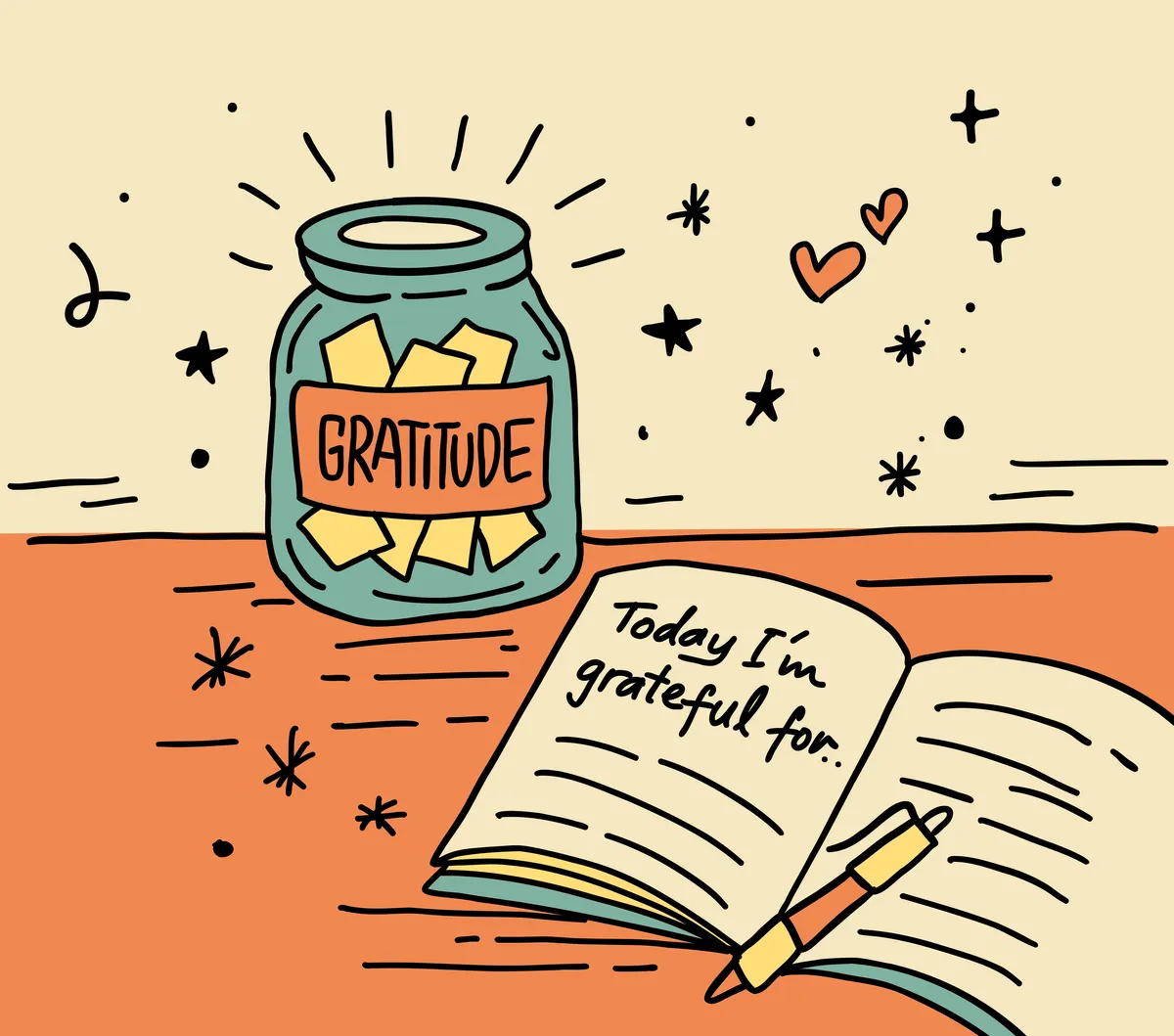
Most journalling advice is generic. Write daily. Record your thoughts. Track your gratitude. See patterns emerge. Fine for general life improvement. Insufficient for sobriety.
Sobriety journalling requires a different focus. Not just recording what happened but examining what alcohol was doing in your life and what sobriety is revealing. Let me show you why I think this matters and how to actually do it.
The difference that makes the difference
Regular journalling captures life events. Agreed? "Today I went shopping, had lunch at Nando's, and felt sad about going back to work tomorrow." Standard diary stuff. Nothing wrong with it but it's not specifically useful for sobriety.
Sobriety journalling on the other hand examines relationship with alcohol and what changes when you remove it. "Today I noticed I wanted to drink when work stress peaked. Instead of reaching for wine, I went for a walk. The stress didn't disappear but I processed it differently."
See the distinction? This isn't just recording your life. You're documenting transformation. You're tracking the specific ways your relationship with stress, emotions, and life itself is changing now that alcohol isn't your default response.
Don't get me wrong, generic journalling can be helpful. Sobriety journalling is specifically targeted at understanding the role alcohol played and building alternative responses. That targeting makes all the difference.
What sobriety journalling actually captures
When you journal specifically about sobriety, you're tracking several things simultaneously. First, you're noticing triggers and patterns. When do cravings hit? What situations make drinking feel necessary? Which emotions send you reaching for alcohol?
These patterns are invisible in the moment. You're just experiencing the craving or the urge. You're not seeing the pattern that created it. They become visible over time when you record them consistently.
You start seeing that stress at work triggers drinking thoughts. That social anxiety makes alcohol feel essential. That boredom is actually your biggest challenge, not the dramatic emotional crises you thought would be the problem. This pattern recognition is gold. You can't address what you can't see. Journalling makes invisible patterns visible.
Secondly, you're processing emotions. Early sobriety floods you with unmedicated emotion. You've been numbing feelings for years. Suddenly you feel everything at full intensity. This is overwhelming. Journalling provides a container for processing these emotions without either acting on them destructively or suppressing them back down.
You write about the anger, the grief, the anxiety, the unexpected joy. The writing itself processes the emotion enough that you don't have to drink to manage it. It's not magic. It's externalisation that creates just enough distance to handle what you're feeling.
Third, you're building evidence of progress. In the moment, sobriety can feel impossible. Like nothing's changing. Like you're white-knuckling through endless difficulty with no improvement in sight. Your journal provides evidence otherwise.
You can look back and see that month one was constant struggle, month two had easier days mixed with hard ones, month three has more easy days than hard ones. This evidence matters when you're doubting whether sobriety is worth it. The journal shows you it's working even when it doesn't feel like it is.
Fourthly, you're documenting what you're gaining, right? What are you actually getting as you remove alcohol? More energy? Better sleep? Clearer thinking? Improved relationships? Recording these gains creates positive reinforcement. You're not just giving up alcohol. You're gaining everything alcohol prevented you from experiencing. The journal captures this transformation in ways that memory alone can't.
Why writing by hand matters more in sobriety
Digital journalling is convenient. I get it. You can type faster, edit easily, search your entries. All practical advantages. But handwriting is proven to be more effective for sobriety specifically, and here's why.
When you write by hand, you engage your brain differently than when you type. The physical act of forming letters, seeing words appear on paper, the slower pace - all of this creates deeper processing. For sobriety journalling, this deeper processing matters enormously.
You're not just recording events. You're examining difficult emotions, processing cravings, understanding patterns. This requires genuine engagement, not just rapid documentation. Handwriting forces that engagement. You can't mindlessly speed through uncomfortable emotions when you're physically writing them out. The medium affects the message. Choose accordingly.
What to actually write about
Sobriety journals work best when they focus on specific territory. Write about cravings when they occur. What triggered it? How intense was it on a scale of one to ten? What did you do instead of drinking? How long did it last? This creates detailed map of your craving landscape. Over time, you understand your patterns well enough to anticipate and prepare for them.
Write about emotions you're experiencing. Not just "I felt sad today" but actual exploration. Why sad? What does this sadness feel like in your body? What does it want to tell you? This depth of emotional examination is difficult. It's also essential for developing emotional intelligence that makes sobriety sustainable.
Write about what you're noticing differently sober. The quality of your sleep. The clarity of your thinking. The depth of your conversations. The energy you have at times of day when you used to be crashed out. These observations build evidence that sobriety is privilege, not punishment. You're documenting what you're gaining, not just what you're losing.
Write about any challenges you're facing. Social situations that feel impossible. Relationships strained by your sobriety. Old patterns you're trying to break. Writing about challenges doesn't solve them. It clarifies them enough that solutions become possible. Sometimes the act of writing out a problem reveals its own solution.
Write about wins you're experiencing, however small. You didn't drink today. You handled a trigger well. You slept better than you have in years. You had a genuine conversation without alcohol lubricating it. These wins accumulate. The journal makes accumulation visible in ways that memory editing tends to obscure.

The cathartic effect nobody explains properly
People say journalling is cathartic. This is true but, I suggest, incomplete. The catharsis isn't just venting emotions onto paper like some kind of emotional garbage disposal. It's the specific relief that comes from externalising internal experience.
When difficult emotions are stuck in your head, they spiral. They amplify. They feel overwhelming and impossible to manage. You're drowning in them with no solid ground to stand on. When you write them down, you externalise them. They're no longer just in your head - they're on the page in front of you where you can examine them.
This process creates distance. Not dissociation or avoidance. Perspective. You can look at what you wrote and think about it rather than being consumed by it. This shift from experiencing to examining is what creates the cathartic effect.
For people in early sobriety who are overwhelmed by emotion, and this is crucial. It prevents drowning in feelings you don't know how to process. You get them out, you look at them, you realise they're manageable even when they don't feel manageable in the moment.
How journaling improves problem-solving
Your conscious mind can only hold limited information. When you're trying to solve complex problems - like rebuilding your entire life without alcohol - that limitation becomes problematic. You're trying to hold all the variables in your head while also analysing them. It's like juggling while doing calculus.
Journalling expands your working memory by contextualising information. You write out the problem. All the variables. The options you're considering. The concerns you have. The potential outcomes. This gets the problem out of your head and onto paper where you can see the whole picture at once.
Your brain can now process the problem differently. You're not trying to hold everything in working memory while also analysing it. The paper holds the information. Your brain does the analysis. This is why people often have insights while journaling that they couldn't access just thinking about problems. The externalisation changes how your brain can work with the information, if you will.
The memory benefit that compounds
Sobriety gives you one enormous gift: you remember your life again. When you're drinking heavily, memories blur. Entire evenings disappear into blackout fog. Years become vague impressions rather than detailed recollections. You lose huge chunks of your own life to alcohol-induced amnesia.
Sobriety also restores memory formation. Your brain can actually encode and store experiences properly again. Journalling amplifies this. When you write about your day, you're encoding those memories more deeply. You're not just experiencing life - you're reflecting on experience, which strengthens memory formation significantly.
Over time, this creates rich detailed record of your sober life. You remember more. You understand more. You can see how far you've traveled. This matters more than it might seem at first. Part of what makes sobriety feel worth it is accumulating evidence that your life is actually improving. Memory provides that evidence. The journal ensures that evidence doesn't fade.
Seeing patterns you can't see otherwise
Your behavioural patterns are largely invisible to you while you're living them. You just do what you do without recognising it's a pattern. It's like trying to see the shape of a forest while you're standing in the middle of it. You see individual trees but not the overall pattern.
Journalling gives you an aerial view. You notice you write about stress at work triggering cravings every Wednesday. You didn't know this was a pattern. Wednesday just felt hard. Now you can see it's consistently hard and you can prepare for Wednesdays differently. Maybe you schedule something positive for Wednesday evenings. Maybe you make sure you have extra support on Wednesdays. Whatever works, but you can only address the pattern once you see it.
You see that you journal about social anxiety before every group gathering. This reveals that your drinking was primarily social anxiety medication, not social enhancement like you told yourself. Now you can address the anxiety directly instead of just white-knuckling through sober social situations wondering why they feel so hard.
You understand that boredom appears in your journal constantly? Your drinking was partly about escaping tedium. This insight lets you build a more engaging life instead of just enduring boring sobriety. These pattern recognitions are transformative. You can't change what you can't see. Journalling makes invisible patterns visible enough to address.
The progression you'll document
If you journal consistently through sobriety, you'll document remarkable progression. Month one reads like war correspondence from the front lines. Constant struggle. Every day feels impossible. Cravings dominate. Emotions overwhelm. You're just trying to survive each day without drinking.
Month three shows a shift. Still difficult but with easier moments scattered through. Some days you don't think about alcohol much. Emotions feel slightly more manageable. You're not just surviving - you're occasionally living.
And month six tips the balance. More good days than hard days. Cravings less frequent and less intense when they do appear. Life starting to feel fuller rather than empty. You're building something instead of just abstaining from something.
Month twelve looks like different person wrote it. Sobriety feels normal most of the time. You've built new responses to old triggers. Life has expanded in ways you couldn't have imagined when you started. Without the journal, this progression is hard to see. Each day feels like each day. You don't notice the gradual improvement because you're living through it incrementally.
The journal provides evidence of progression that memory alone can't capture. Memory smooths things out, makes past difficulties seem less difficult than they were, makes current difficulties seem harder than they are. The journal preserves actual experience. This evidence matters when you're questioning whether sobriety is working.
Why most people won't do this
Sadly, most people reading this won't start sobriety journaling immediately. They'll think it sounds useful. Maybe try it once or twice. Write an entry, feel good about it, then never do it again. Not because it doesn't work. Because it requires daily effort for gradual benefit.
It's easier to just try to remember things. To hope patterns become obvious without documentation. To trust that progress is happening without evidence. But this ease costs you. Pattern recognition that could happen in weeks takes months or never happens at all. Progress that could be visible becomes invisible. Understanding that journaling would provide remains elusive.
You keep struggling with the same triggers because you never documented them long enough to see they're triggers. You doubt whether sobriety is improving your life because you don't have evidence of the improvement. You repeat the same mistakes because you never examined them closely enough to understand why you made them.
What this actually requires
Sobriety journalling isn't complicated. It's just consistent. You need a notebook and pen. Or digital device if that's genuinely easier for you, though I'd encourage trying handwriting first. You need time. Ten to fifteen minutes daily. Not hours. Just enough time to reflect on the day and write something meaningful.
Ideally same time each day to build habit. Many people journal before bed, processing the day. Others journal in the morning, setting intentions. Either works. Consistency matters more than timing. You need honesty. The journal only works if you're truthful. Performing for an imaginary audience defeats the purpose. Nobody's reading this but you. Write what's actually true, not what sounds good.
You need persistence. One week isn't enough to see patterns. One month starts showing useful information. Three months provides real insight. Six months and you've got detailed map of your sobriety territory. That's it. No fancy system. No elaborate method. Just regular, honest documentation of your sobriety journey.
The legacy nobody thinks about
If you journal through your sobriety, you're creating something remarkable: a detailed documentation of transformation. Years from now, you can read your early entries and remember how hard it was. How overwhelming everything felt. How impossible sobriety seemed in those first weeks and months. How cool is that?
Then you can see your progression through the pages. The gradual shift from struggle to stability. The slow expansion from deprivation to privilege. The evolution from white-knuckling to genuinely preferring sober life. This documentation is valuable for you. Reminder of how far you've come when you're tempted to forget or when you're facing new challenges and wondering if you can handle them.
It might also be valuable for others. Your children might read it someday and understand what you went through. People you coach or support might benefit from seeing real documentation of transformation rather than polished after-the-fact stories. Anyone who needs evidence that change is possible finds that evidence in honest journals.
The journal becomes testament to the fact that transformation is real, even when it feels impossible in the moment. It's proof that the hard work pays off, that the difficulty is temporary, that the person struggling in early sobriety can become the person thriving in long-term sobriety.
What you're actually choosing
You can try to manage sobriety without journalling. Many people do. Some succeed through sheer willpower or because they're naturally good at pattern recognition or because their sobriety happens to be relatively straightforward. Or you can document the journey. Make patterns visible. Process emotions externally. Build evidence of progress. Create detailed map of your transformation.
One approach relies on memory and hope. The other creates systematic understanding of your own process. Both can work. One works more reliably. The choice is yours. Not abstract future choice. Right now choice.
Will you start documenting your sobriety today? Get a notebook, write today's date, spend ten minutes reflecting on where you are right now in your sobriety journey. Or will you continue hoping that memory and willpower are sufficient?
One path provides clarity. The other hopes clarity emerges accidentally. Choose accordingly. Your future self will either thank you for the documentation or wish you had started sooner. Only you can decide which future you're creating.

Book a free discovery call. We'll talk honestly about where you are and whether my approach fits what you need.
If we're a good match, we'll work together. If not, we'll know and maybe I can point you toward someone or something else.
Either way, you'll have clarity about your next step.