Most people who think about changing their drinking spend months - sometimes years - stuck in the same loop: "I should probably do something about this. But not yet. Maybe next month. Or after this event. Or when things calm down."
They want things to be different. They know drinking isn't serving them. But somehow, they never actually start.
The problem isn't lack of willpower or motivation. The problem is they're trying to force action before they're genuinely ready for it. And forcing change before you're ready rarely works - you either don't start at all, or you start and give up quickly because the foundations weren't there.
Understanding where you are in the change process - not where you think you should be, but where you actually are - is surprisingly useful. It tells you what you need to focus on right now, rather than beating yourself up for not being further along.
The Stages of Change
Psychologists like James Prochaska and Carlo DiClemente spent decades studying how people change addictive behaviours. What they discovered is that change isn't a single decision - it's a process with distinct stages.
Most people move through these stages in order, though not always linearly. You can move forward, get stuck, slip backward, and move forward again. Understanding which stage you're in helps you know what you actually need to do next.
Pre-contemplation: You're not thinking about changing. Either you don't see your drinking as a problem, or you're not ready to acknowledge it.
Contemplation: You're thinking about it. You're aware something might need to change, but you're ambivalent. Part of you wants to, part of you doesn't.
Preparation: You've decided to change and you're planning how. You're gathering resources, setting dates, getting ready to start.
Action: You're actively making changes right now. You're doing things differently, building new habits, navigating life without your old patterns.
Maintenance: You've made the change and now you're working to sustain it long-term. You're protecting what you've built and preventing relapse.
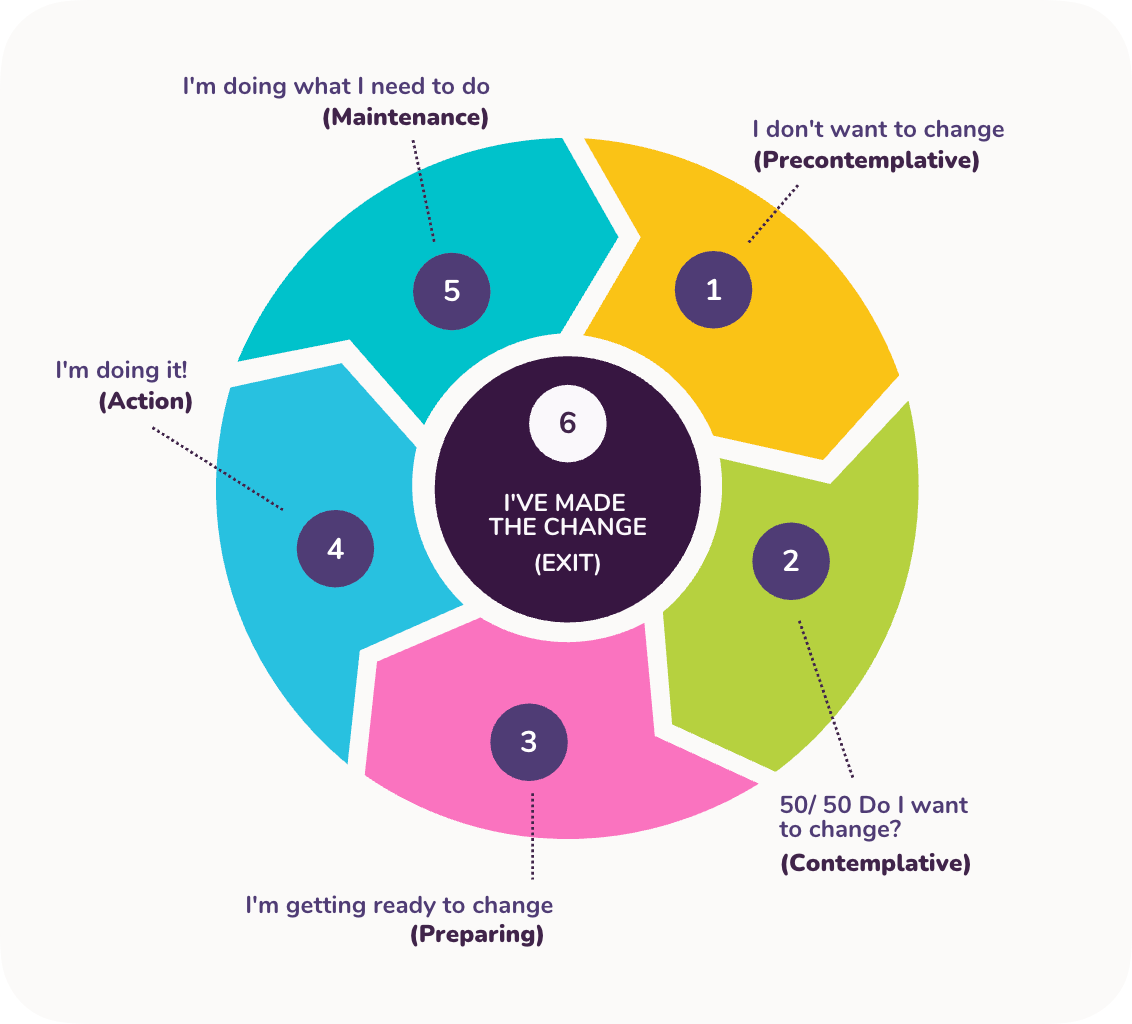
Most advice about changing drinking assumes you're in the action stage - it tells you how to quit, how to handle cravings, how to stay sober. But if you're still in contemplation, that advice is useless. You don't need tactics for quitting; you need clarity on whether you actually want to quit.
This assessment tells you which stage you're in so you can focus on what's actually relevant for you right now.
Why This Matters
Trying to take action before you're ready is like trying to build a house on sand. It might look like you're making progress, but the foundation isn't there, and it collapses quickly.
I've worked with hundreds of people on changing their drinking, and the ones who succeed aren't necessarily the most motivated or disciplined. They're the ones who do the work appropriate to their stage.
The person in contemplation needs to get clear on their reasons for changing - building a compelling case for why it's worth the effort. Telling them "just stop drinking" doesn't help. They already know they could stop; they're not yet convinced they should.
The person in preparation needs practical plans and concrete steps. Telling them "just think about whether you really want this" is pointless - they've already decided. They need logistics.
The person in action needs support, accountability, and tools for handling difficult situations. They don't need more thinking - they need help doing.
Knowing your stage prevents you from wasting time on the wrong work.
What This Assessment Won't Do
This isn't going to tell you whether you have a drinking problem or whether you need to stop. If you want that kind of assessment, take the AUDIT or CAGE.
This also won't tell you whether you're a "good" or "bad" person based on which stage you're in. There's no moral hierarchy here. Pre-contemplation isn't failure, and action isn't success. They're just different places in a process.
What this assessment will do is give you an honest picture of where you actually are, so you can stop pressuring yourself to be somewhere you're not and start doing the work that's actually useful right now.

Take the Assessment
Six questions. Two minutes. Be honest - the only person you're answering to is yourself.
After You Know Your Stage
Whatever stage you're in, that's where you are. Not where you should be, not where you wish you were - where you are.
The question isn't "how do I skip ahead to action?" The question is "what do I need to do at this stage to move forward naturally?"
If you're in pre-contemplation, you need awareness. Start paying attention to how alcohol actually affects you - not how you think it affects you, but what's really happening.
If you're in contemplation, you need clarity. Get honest about what you'd gain and lose if you changed. Write it down. Talk to people who've done it. Stop sitting on the fence.
If you're in preparation, you need a plan. Stop researching and start deciding. Pick a date. Line up your support. Make it real.
If you're in action, you need help. Don't try to white-knuckle this alone. Get support, use tools, stay connected to why you're doing it.
If you're in maintenance, you need vigilance. Don't assume you've got this forever. Keep protecting the change you've made.
Each stage has its own work. Do that work, and you'll move forward. Skip it, and you'll stay stuck.
What Happens Next
Change doesn't happen in a straight line. You might move from contemplation to preparation, then slip back to contemplation when life gets hard. That's normal. The stages aren't a one-way journey - they're a process you move through, sometimes multiple times, until the change sticks.
The goal isn't to rush through the stages as fast as possible. The goal is to do the work of each stage properly so the foundation is solid when you get to action.
If you're ready for structured support that meets you where you actually are - not where you think you should be - my Phenomenal Sobriety Program is designed around this exact model. It gives you the right work for your stage, so you're not wasting time on things that aren't relevant yet.
But first: know where you are. Everything else follows from that.
Which stage are you in, and does it match where you thought you'd be?

Book a free discovery call. We'll talk honestly about where you are and whether my approach fits what you need.
If we're a good match, we'll work together. If not, we'll know and maybe I can point you toward someone or something else.
Either way, you'll have clarity about your next step.