You know that feeling when you look at your life and think "this isn't quite right"?
Not catastrophically wrong. Not rock bottom. Just... not what you imagined for yourself.
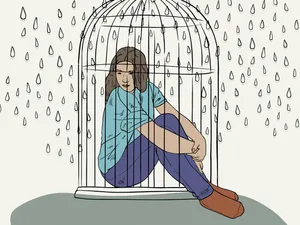
Maybe you're successful on paper but exhausted in reality. Maybe you're showing up for everyone else but disappearing on yourself. Maybe you've got all the trappings of a good life but you're drinking more than you'd like to admit.
There's a gap.
A gap between the person you are and the person you want to be. Between the life you're living and the life you know is possible.
And if you're honest - really honest - alcohol is part of what's keeping that gap wide open.
The Motivation Gap
Here's what makes changing your drinking so difficult: you can see both sides of the gap clearly.
You see where you are now - the habits, the patterns, the compromises you've made. You also see where you want to be - healthier, clearer, more present, more yourself.
The problem? You're stuck in the middle, and alcohol is the bridge you keep using to avoid dealing with the distance.
Psychologists call this "motivational ambivalence" - you want to change, but you're also getting something from staying the same. Every time you drink, you're choosing immediate relief over future growth. It's not weakness. It's human.
But here's what most people miss: you can't close the gap until you clearly define both sides of it.
You need to get specific about:
- What you actually want for your future (not what you "should" want)
- What you're doing now that's preventing it
- How that makes you feel
- What you could do differently
- How that change would feel
Sounds simple. It is simple. But simple isn't the same as easy.
Why Vague Goals Fail
Most people approach sobriety with vague motivation:
- "I should drink less"
- "I want to be healthier"
- "I need to get my life together"
These aren't bad goals. They're just not specific enough to compete with the very specific desire for a drink when 7pm rolls around.
Compare that to:
- "I want to wake up clear-headed and go for a run before my kids wake up"
- "I want to write the book I've been talking about for five years"
- "I want to show up fully present when my partner talks to me, not half-listening while planning my next drink"
See the difference? The second set paints a picture. You can feel it. You can imagine it. It's real.
Closing the gap requires making the future version of yourself more vivid and compelling than the comfort of your current patterns.
That's what this exercise does.

Activity: The Big Questions
Grab a pen and paper. Find somewhere quiet where you can be honest with yourself for ten minutes.
These five questions are deceptively simple. Don't rush them. Let yourself sit with each one and write whatever comes up - not what sounds good, but what's true.
1. What do I want for my future?
Be specific. Not "be happier" but what does that happiness actually look like? What are you doing? Who are you with? How do you spend your days?
Examples:
"To be healthy enough to play with my grandkids"
"Get a new job that doesn't drain me"
"Travel to places I've always talked about"
"Have the energy and clarity to build my own business"
"Be someone my kids are proud of, not worried about"
Your answer:
[Write down your thoughts]
2. What am I doing now?
Get honest about your current reality. No judgment, just observation. What's actually happening in your life right now?
Examples:
"Drinking 4-5 nights a week, sometimes more"
"Not exercising or taking care of myself"
"Going through the motions at work"
"Avoiding difficult conversations"
"Wasting time on things that don't matter"
Your answer:
[Write down your thoughts]
3. How do I feel about what I'm doing now?
This is where it can get uncomfortable. But discomfort is information. What emotions come up when you look at the gap between questions 1 and 2?
Examples:
"Guilty that I'm wasting time"
"Anxious about where this is heading"
"Frustrated with myself"
"Disappointed that I keep making the same choices"
"Scared that this is all there is"
Your answer:
[Write down your thoughts]
4. What could I do differently to help me get what I want?
This is the bridge. What specific actions would close the gap? Focus on what you can control.
Examples:
"Stop drinking completely"
"Start exercising three times a week"
"Get professional help or join a program"
"Be honest with my partner about how I'm feeling"
"Set boundaries at work"
Your answer:
[Write down your thoughts]
5. How would changing what I do (or getting what I want) make me feel?
Now imagine you've made those changes. You're living question 1 instead of question 2. How does that feel? Get specific about the emotions.
Examples:
"Proud of myself for the first time in years"
"Less anxious because I'm finally taking action"
"More confident and present"
"Relieved that I'm not hiding anymore"
"Excited about what's possible"
Your answer:
[Write down your thoughts]
What This Exercise Reveals
If you've been honest with yourself, you should now see three things clearly:
1. The specific gap between your current reality and your desired future
Not a vague sense of "something's wrong" but actual, concrete differences. This clarity is powerful because it removes the fog that alcohol creates. You can't fix what you can't see.
2. The emotional cost of staying where you are
Question 3 really matters. Those feelings - guilt, anxiety, frustration, fear - are information. They're your internal compass telling you something needs to change. Don't dismiss them.
3. A pathway forward
Question 4 gave you specific actions. These aren't theoretical. They're things you could start doing today, this week, this month. The gap doesn't close all at once - it closes one choice at a time.
The Hard Truth
Here's what nobody wants to hear: the gap doesn't close by itself.
Time alone won't fix it. Wanting things to be different won't make them different. The gap only closes when you consistently choose the actions in question 4 over the patterns in question 2.
And if alcohol is part of what's keeping you stuck in question 2, then dealing with your drinking isn't optional - it's the first step to everything else you want.
The good news? You don't need to have it all figured out. You just need to start.
Where To Go From Here
You've just done something important - you've named the gap. Now what?
1. Revisit These Questions Regularly
Your answers will evolve as you do. Check in monthly. Notice what shifts.
2. Share This With Someone
Saying these truths out loud to someone you trust makes them real and gives you accountability.
3. Connect to Your Values
The future you want (question 1) reflects what matters most to you. Keep that front and centre. What Really Matters to You?
4. Take One Action This Week
Pick one thing from question 4. Just one. Do it. Then do it again. Small, consistent actions close big gaps.
5. Get Support
Sometimes the gap feels too wide to cross alone. That's not weakness - that's wisdom.

Book a free discovery call. We'll talk honestly about where you are and whether my approach fits what you need.
If we're a good match, we'll work together. If not, we'll know and maybe I can point you toward someone or something else.
Either way, you'll have clarity about your next step.