

Imagine a pile of Lego. Not a boxed set with a picture on the front and a numbered booklet inside, but a pile. More pieces than you could sort in a lifetime, every colour and shape ever moulded, heaped higher than you can see. Now imagine someone is led to the foot of it and told, simply, to make something. Watch what happens to their face.
Most people go quiet. Not because they lack imagination, but because they have too much permission. A child handed three bricks builds without hesitation. The same child handed everything freezes. Possibility, past a certain volume, stops feeling like freedom and starts feeling like pressure, and the natural response to pressure is to reach for something the hands already know. So they build a car. Or a small house with a sloped roof and a door that does not open. The pieces were limitless. The result came straight from the first page of a manual nobody printed but everybody somehow carries.
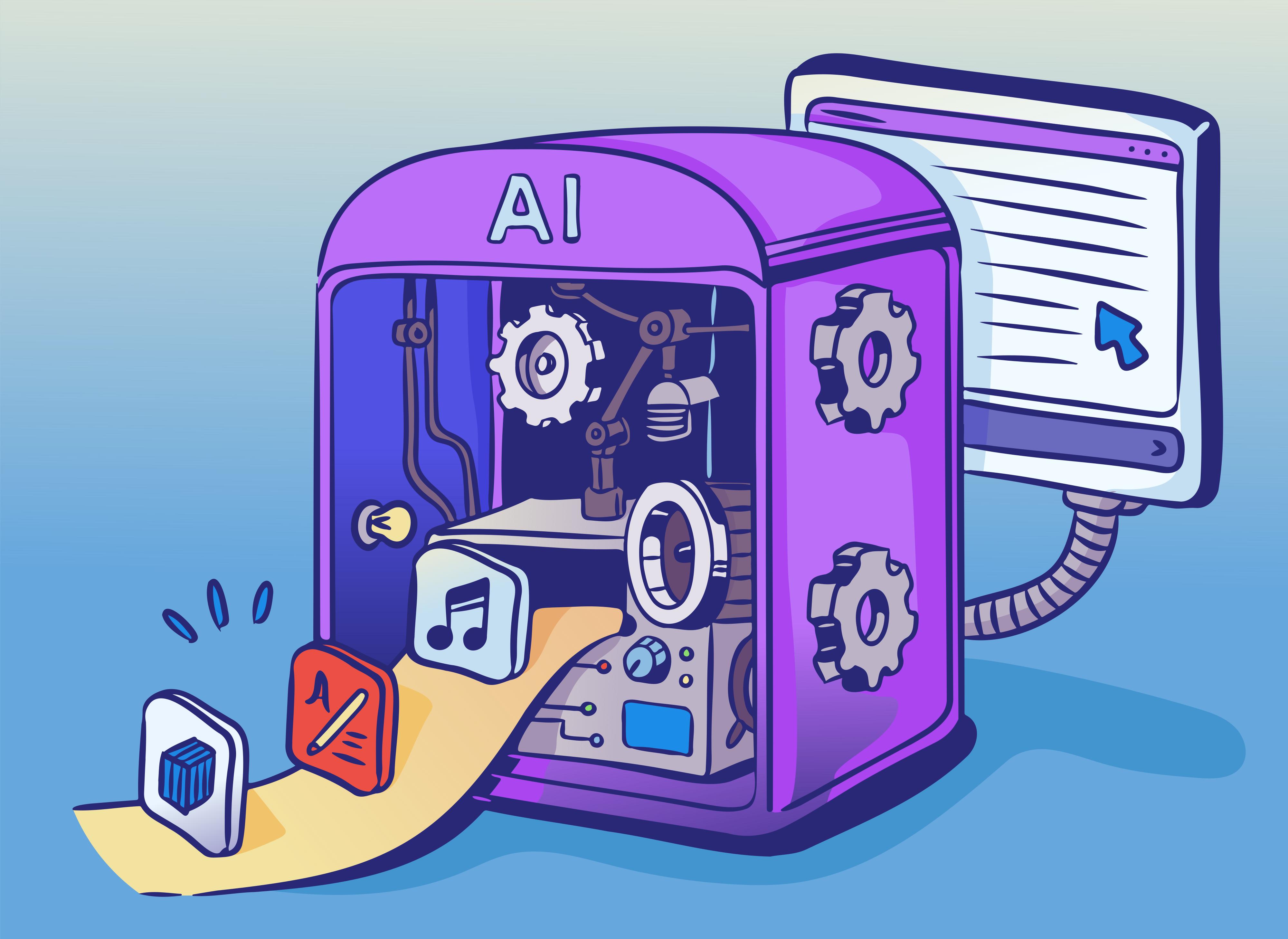
I think this is the single most useful image we have for understanding what is happening to people, right now, in front of artificial intelligence. Because AI did not arrive as a tool with a purpose printed on the side. It arrived as a pile. A heap of latent possibility with no edges and no instructions, and we were all led to the foot of it and told to make something. And we have done, by and large, exactly what people do when handed too much. We have built the car. We have built a little house.
The overwhelm is rational, not lazy
It has become fashionable to be slightly contemptuous of how most people use AI. They ask it to summarise the document they did not want to read. They have it tidy an email they could have written themselves. They use a thing of supposedly limitless capability to do, marginally faster, the things they already knew how to do slowly.
The clever-person response is to sigh at this. I want to suggest the opposite. The car and the little house are not failures of imagination. They are the honest, rational reach of a hand confronted with too much choice and no reason to prefer one option over another. Given a pile and no purpose, building something familiar is not stupidity. It is the only sane move available.
Which means the problem was never the people, and it was never the capability of the technology. The problem is structural. Possibility without purpose produces paralysis, and paralysis resolves itself by defaulting to the familiar. If you want different results, you do not need a more powerful pile, and you do not need cleverer people. You need to change the one variable that actually governs what gets built. You need to arrive with something the pile cannot give you.
The rare builders are not seeing more
There is a second kind of builder, rarer, and it is worth being precise about what makes them rare, because the popular explanation is wrong. The lazy story is that they see more. That where the rest of us see a heap, they see a cathedral, and the vision simply arrives, fully formed, a gift of temperament. This is flattering and false, and believing it is the single biggest reason people stay stuck. If the rare builders are simply blessed with vision, then there is nothing for the rest of us to learn and nothing to do but envy them.
But they are not seeing more. They want something more particular, and they let that wanting do the sorting. This is the whole secret, and it is almost disappointingly practical. The pile does not become workable when you imagine something grand. The pile becomes workable when you bring a constraint to it from somewhere outside itself. Something you care about so specifically that it tells you, piece by piece, which of the ten thousand near-identical greys is the one your thing actually needs, and which of the others, however beautiful, are simply not for this.
Read that again, because it inverts the entire conventional wisdom about AI. We are told the power is the point. That the bigger the model, the broader its capability, the more it can do, the better. But the size of the pile is not the gift. The size of the pile is the problem. The care is the gift, because care is the only thing that can cut a possible shape out of an impossible quantity. The most capable tool in human history is, to the open and undirected hand, very close to useless, and it becomes extraordinary only in the grip of someone who walked up already holding something.
What it looks like to arrive holding something
Let me make this concrete, because principles are cheap and you, as the reader rightly want to know how the move is actually made. To arrive holding something is to come to the pile not with the question what can I make, which is the question that drowns you, but with the question will you give me the pieces for this. The “this” is everything. It is the constraint you import from your own life, your own work, your own grief or curiosity or sense of a wrong that wants righting. And the constraint does two jobs at once, only one of which people notice.
The job people notice is selection. The constraint tells you what to keep. The job people miss, and it is the more important one, is rejection. The constraint tells you what to throw back. And here is the part that genuinely surprises people the first time they feel it: most of what you throw back is not rubbish. It is brilliant. The pile is full of clever, dazzling, technically impressive things it would love to give you, and the discipline of building something good is mostly the discipline of refusing them, because they would make your thing cleverer without making it better. Every piece that would have made the work more impressive and less true goes back on the heap. The unglamorous truth of good work with AI is that it is mostly subtraction performed in the service of a constraint, and what is left at the end is smaller, plainer, and exactly right in a way the pile would never have suggested on its own.
I know this because I spent a long time doing precisely this, with a constraint I cared about more than I cared about being impressive. I was looking, in the pile, for a way to be present to people sitting alone with a quiet question about themselves, a question they were not ready to say aloud to anyone with a clipboard or a duty to record it. People who are not in crisis and not in denial, but somewhere honest and unmapped in between. That constraint did all the sorting for me. It told me, again and again, to throw back the cleverer version, the more capable version, the version that would have shown off what the pile can do, because every one of those would have made the thing colder, and cold was the one thing it could not afford to be. What survived was small and warm and remembered you, and it was nothing the pile would have proposed and everything the pile could provide once asked the right way.
The question worth asking
So if there is a single thing to take from this, it is not a prompt technique and it is not a list of use cases, both of which date within months. It is a change of question. The question the pile keeps whispering, what could you make, is the wrong one, because it has no answer, or rather it has every answer, which amounts to the same thing. It is the question that builds the little house with the door that does not open. It is the question that produces a thousand near-identical AI products and a million summarised emails and a vague collective sense that this was all supposed to be more wondrous than it has turned out to be.
The better question is quieter and harder and entirely yours. Not what could you make. What do you care about so much, so specifically, that you would let it choose for you. What would you walk up to the pile already holding. Because that, and only that, turns an impossible quantity into a single buildable thing, and it is available to absolutely everyone, which is the genuinely democratic and hopeful part. The rare builders are not a different species. They simply arrived holding something, and you can too, the moment you stop asking the pile what it can do and start telling it what you cannot stop caring about.
The technology is astonishing. It really is. But the astonishment was never the point, and treating it as the point is exactly what leaves people standing overwhelmed at the foot of the heap. The power of AI is the least interesting thing about it. What you bring to it is everything. The pile has been waiting a long time, and it is not waiting for the cleverest hand in the room. It is waiting for the one that arrives already holding something.