

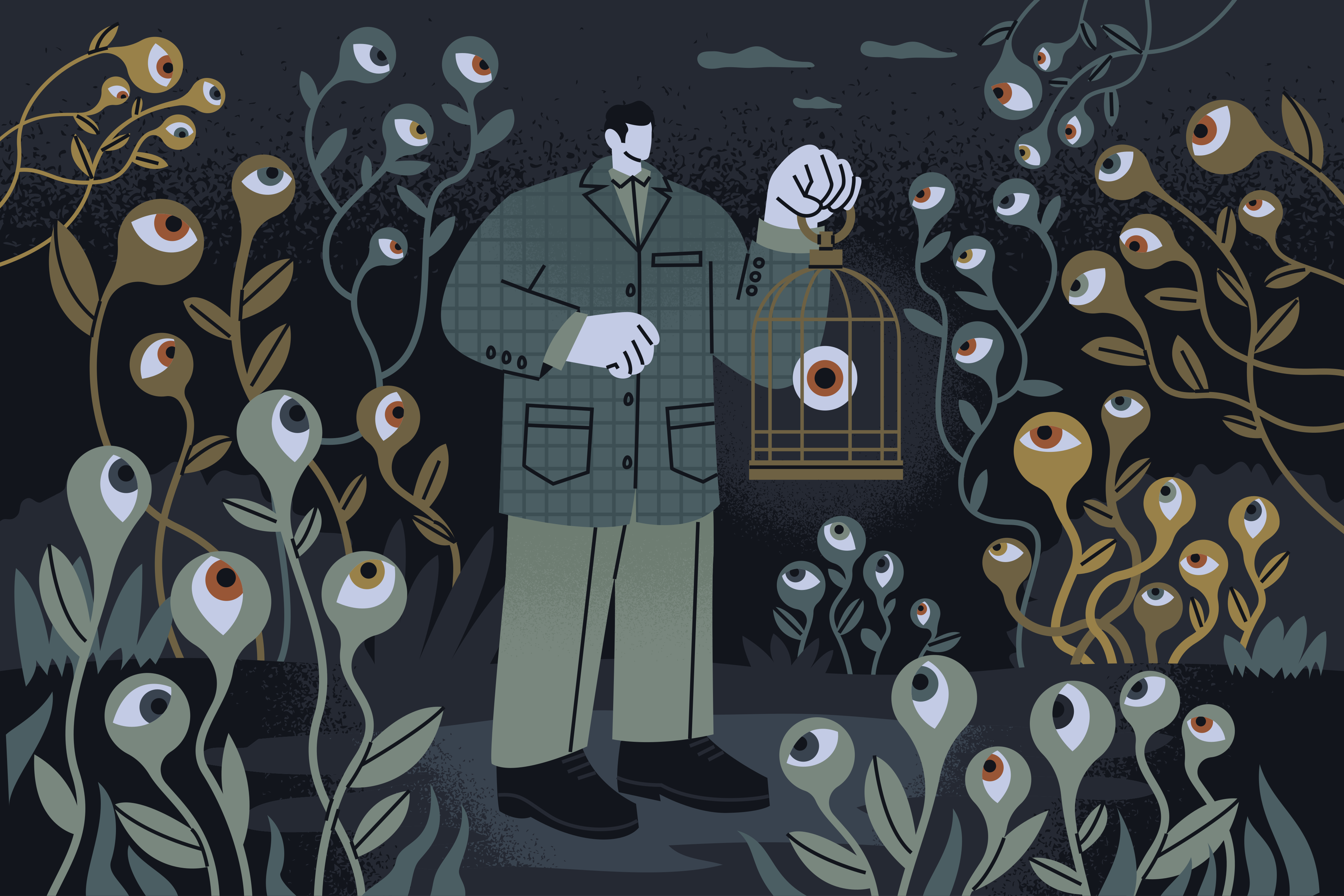
I read Meghan O’Gieblyn’s long read in the Guardian earlier this week, an edited extract from her book Will and Attention, and I have been turning it over for a few days since. Turns out Meghan had eleven years of sobriety. Then she spent about nine months drinking in secret while her husband believed she was still sober. I am over nine years alcohol-free myself, and I want to write about what her account showed me, and how it made me feel. I will go open-hearted, because it is a hard piece, and I think it deserves care and respect, as always.
It started as a game
Meghan describes a kind of hypothetical game she played with herself. If she were to drink, how would she do it? What would she order, and where? It felt like idle curiosity, a thought experiment with no stakes. Then, almost without her noticing, the game became planning.
The detail that has stayed with me is a small one on the face of it. She couldn’t bring herself to say the order out loud. So she found ways around speaking: pointing at a deli case, using self-serve taps, and later ordering through QR codes that asked nothing of her voice. The secret was not only in her head. It had been built into the logistics of her days.
I recognise the shape of this, even where the details differ. For a start, online ordering of booze wasn’t a thing when I was in active addiction. Thank goodness. You see, long before a drink is poured, a mind can rehearse, and the rehearsal is rarely labelled as what it is. It calls itself curiosity, or research, or a bit of harmless imagination. I have learned to treat any thought that arrives in a disguise with more than a little suspicion. The game was never really a game. It was the first draft of a plan.
When a good idea becomes a permission slip
Part of what makes her story so unsettling is that the road back to drinking ran through ideas she took seriously. She had been reading about meditation and consciousness, much of it suggesting that the self is less solid than we assume, that it is a story the mind keeps telling. She drew a conclusion that sounds almost reasonable on the page. If the self is only a story, she could tell it any way she liked, including a version in which she was someone who drinks.
I don’t think those ideas are wrong. I think the mind is a skilled advocate, and it will borrow whatever vocabulary is nearest to hand. Philosophy works as well as anything else when the real request is, let me have this.
Then comes a moment in Helsinki. Faced with a mulled drink that came in alcoholic and non-alcoholic versions, she pointed to the alcoholic one. She drank it. She did not fall off a cliff. She felt blurry and a little low, and she began to wonder whether the inevitability she had feared for eleven years, the sense that one drink meant ruin, had been a necessary fiction all along.
This is where I slow down. This has been a personal terror of my own. She may be right that the catastrophe is not always instant. But a story can be a fiction and still be holding up the roof. For eleven years it did. The story held until she tested it, and the testing is what unravelled everything. That is the line I keep returning to, and it is why I gave this piece its title.
The luminous thing she leaves out
When Meghan tells her story at meetings, there is one part she deliberately omits. In an airport, under skylights, she felt something she describes as luminous, a light that seemed to carry a cosmic indifference, and in that light the drinking felt strangely peaceful. She keeps it from the room because she does not want to romanticise self-destruction for people who are fragile.
Fair enough, I understand that, and I respect it. I also find myself wanting to push on it, just because. Many people in early sobriety carry a private memory like that, a moment when drinking felt like grace. They sit in a circle hearing only the ugly versions of the story and quietly conclude that they are the only ones who ever felt the pull as beauty. Shame fills the gap where the honest account should be.
Her own telling offers a way through. The luminous moment is real, and so is everything that followed: nine months of binges she compares to controlled explosions, in airports and hotels, a bath run to hide the smell, vodka and vomiting at O’Hare. The euphoria lasts a few minutes in memory. The cost lasts much longer. I would rather tell people both halves in the same breath than leave the first half to find them alone.
Kindness nobody had earned
One of the subtler threads in the piece is the way strangers treated her during those months. People were kind to her when she had done nothing to deserve it, and she reaches for the word grace, which she links to Luther, where goodness arrives as a gift and not a wage.
I think about this a lot in my own work. Secrecy runs on shame, and shame assumes that kindness must be earned. What loosens it is being met warmly before you have cleaned yourself up. I can’t engineer a stranger’s grace, but I can try to make the conversations I host feel like that: nothing to prove at the door, no number you must show first.
Grace did not end her secret on its own. But it is a reminder that a person is more than the thing they are hiding.
“Eleven years”
There’s one scene I can’t shake, and it is a phone call. O’Gieblyn spoke with an eighteen-year-old fresh out of rehab after an overdose. She talked with him about choosing between one luminous thing and everything else, all the while hiding her own relapse. When he asked how long she had been sober, she answered, “Eleven years.”
I read that sentence over again. I could feel her pain. You see, it’s not a simple lie. For him it was a lifeline, proof that long sobriety exists. For her it was the version of herself she most wanted to be. And it is exactly the pressure that anyone looked to as a guide will know: the number becomes a credential, and a credential is very hard to put down.
As a coach, I sit in that exact same chair. I have a date I am proud of, and I want people to see that recovery is possible. But I don’t want my number to become a mask. I would want to be able to speak honestly about where I stand, out loud, to the very people who lean on me. A guide who cannot be honest about the map is not much use to anyone.
What I take from it
So, I finished the piece with three things I want to hold onto.
First, secrecy is the signal worth watching, often before the drink itself. Her relapse became dangerous the moment it had to be hidden, because hiding takes planning, and planning takes over a life. If someone I work with tells me they have started arranging things so nobody sees, that is the thing to talk about.
Second, the number is not the person. Eleven years was real, and so was what happened afterward. Both can be true. I would like recovery language to leave room for that, so nobody has to choose between pride in their history and honesty about their present.
Third, people need somewhere to say the unsayable aloud before it turns into logistics. O’Gieblyn could not say the order out loud, and so it went underground. That is a large part of why I built Sol, by the way. It is a place to say the plan, the doubt, the strange glittering memory, at any hour, to something that will not flinch. It is no replacement for people. It is a way back to them, a rehearsal for honesty in place of a rehearsal for a drink.
Where she leaves us
The extract closes on an image I keep thinking about. A small marine crustacean leaves its shell on the shore while the animal itself slips into the sea. I read it as both a warning and a tenderness. A shell can stand on the beach for years and look intact. It is the animal that needs to get home.
I’m grateful to Meghan for writing so plainly about the part most of us would hide. If this stirred something in you, read her full piece in the Guardian, and her book, Will and Attention. And if you are carrying something you have not said aloud yet, I hope you find someone, or something, to say it to today.
Source: Meghan O’Gieblyn, “’I perfected deception’: My secret life as a relapsed alcoholic”, The Guardian, 3 November 2026, an edited extract from Will and Attention (Little, Brown).