What Alcohol Actually Does to Your Body (And Why Nobody Tells You the Truth)
Everyone knows alcohol affects you. That's obvious. You feel it within minutes of your first drink.
But most people don't actually understand what's happening inside their bodies. They know alcohol makes them drunk. They don't know the cascade of biological chaos that creates that drunkenness.
I'm going to tell you exactly what happens. Not to scare you. Not to moralise. Just to give you information most people never get because we treat alcohol like a benign social lubricant rather than the potent psychoactive drug it actually is.
The moment alcohol enters your body
You take a drink. Within minutes, alcohol starts absorbing directly through your stomach lining into your bloodstream. It doesn't need to be digested like food. It just passes straight through into your blood.
This is why you feel effects so quickly. And why drinking on an empty stomach hits harder - there's nothing slowing that absorption down.
Once in your bloodstream, alcohol travels everywhere. Your brain. Your heart. Your liver. Every organ, every cell. Alcohol is promiscuous - it doesn't discriminate about where it goes.
This universal access is what makes it so effective at what it does. And so damaging.
What your liver is desperately trying to do
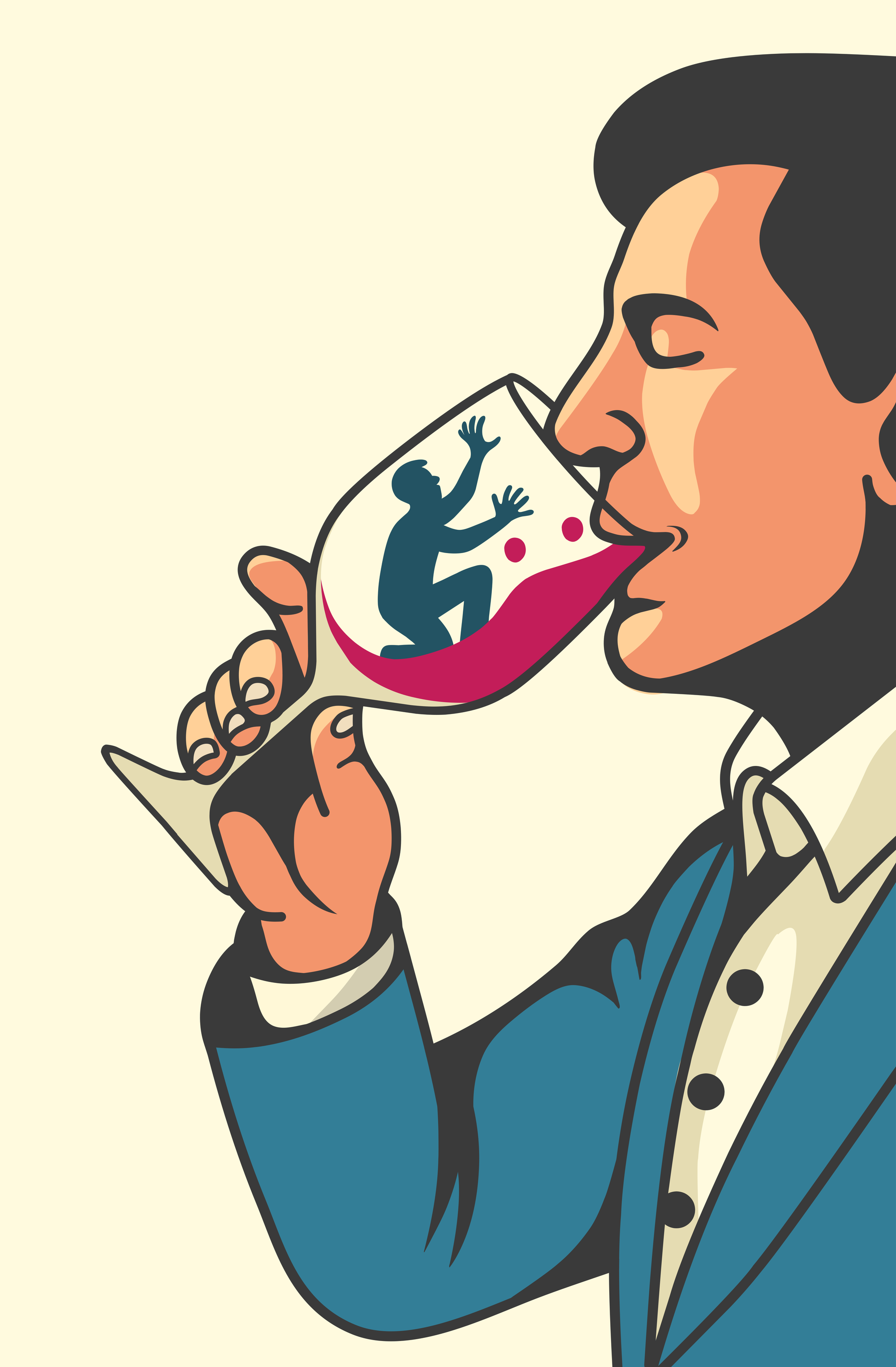
Your liver recognises alcohol as a toxin immediately. Because that's what it is. A toxin.
Your liver's job is detoxification, so it starts working to break alcohol down into less harmful substances. First into acetaldehyde - which is actually more toxic than alcohol itself - then into acetate, which your body can finally eliminate.
But here's the problem: your liver can only process about one standard drink per hour. That's its maximum capacity.
When you drink faster than that - which most people do - alcohol accumulates in your bloodstream. Your liver falls behind. The backlog builds.
This is why you get progressively drunker as you continue drinking. Your liver is working at maximum capacity while you keep adding more work to its queue.
Do this repeatedly over years, and your liver starts failing at its job. Fatty liver disease. Cirrhosis. Liver failure. These aren't abstract warnings. They're predictable outcomes of overwhelming your liver's processing capacity consistently.
What's happening in your brain
Alcohol is a central nervous system depressant. It slows neural activity across your entire brain.
This sounds technical until you understand what it means practically: your brain stops working properly.
Judgment impairment happens first. The prefrontal cortex - responsible for decision-making, impulse control, rational thinking - gets suppressed. This is why drunk you makes decisions sober you would never make.
Then motor control degrades. The cerebellum, which coordinates movement and balance, can't function normally under alcohol's influence. You stumble. You slur. Your fine motor skills disappear.
Memory formation breaks down. The hippocampus can't encode new memories properly. This is why blackouts happen - not because you forgot what happened, but because your brain never recorded it in the first place.
Keep drinking heavily over time, and you cause actual structural damage. Brain shrinkage. Cognitive impairment. Memory problems that don't resolve when you stop drinking.
Your brain is remarkably plastic and can recover from a lot. But chronic alcohol abuse pushes it past recovery into permanent damage.
Your cardiovascular system under pressure
The research on alcohol and heart health is confusing because it's contradictory.
Moderate drinking - genuinely moderate, not what most people call moderate - shows some protective effects against certain types of heart disease.
But any amount beyond truly moderate drinking starts causing problems. High blood pressure. Irregular heartbeat. Weakened heart muscle.
Heavy drinking significantly increases your risk of stroke, heart attack, and cardiovascular disease.
Here's what nobody mentions: most people who drink don't drink moderately. They drink in patterns that cause harm while telling themselves they're moderate drinkers.
One or two drinks per day, maximum, with alcohol-free days each week - that's moderate drinking. Most people exceed that regularly while considering themselves moderate.
What's happening in your digestive system
Alcohol irritates everything it touches in your digestive tract.
Your stomach lining becomes inflamed. Your intestines get disrupted. Nutrient absorption becomes impaired.
This is why heavy drinkers often show signs of malnutrition despite eating. The alcohol interferes with their body's ability to extract and use nutrients from food.
Gastritis. Ulcers. Pancreatitis. These aren't rare complications. They're common outcomes of consistent heavy drinking.
And here's something else most people don't realise: alcohol affects gut bacteria. Your microbiome - which influences everything from mood to immune function - gets disrupted by regular alcohol consumption.
The hangover nausea isn't just dehydration. It's your digestive system in active rebellion against the toxin you've forced through it.
The dehydration nobody connects
Alcohol is a diuretic. It makes you urinate more than the fluid you're consuming.
This seems obvious when you're drinking - you're constantly going to the bathroom. But people don't connect this to the cascade of problems it causes.
Dehydration affects everything. Your blood becomes more concentrated. Your kidneys work harder. Your brain tissue literally shrinks slightly, pulling away from your skull - this is what causes hangover headaches.
Electrolyte imbalance follows dehydration. Sodium, potassium, magnesium - all disrupted. This contributes to the fatigue, dizziness, and general awfulness of hangovers.
Chronic dehydration from regular drinking stresses your kidneys long-term. Kidney damage isn't as dramatic as liver damage, but it's just as real.
The mental health impact nobody discusses
Alcohol and mental health have a complicated, destructive relationship.
Short-term, alcohol reduces anxiety. This is why people use it socially - it genuinely does reduce social anxiety and lower inhibitions.
But this relief is temporary and comes with a rebound effect. When alcohol leaves your system, anxiety returns worse than before. Your brain's chemistry has been disrupted and takes time to rebalance.
Depression and alcohol feed each other. Alcohol is itself a depressant. It disrupts neurotransmitter balance. Regular drinking creates or worsens depressive symptoms.
Then people drink to cope with the depression that drinking is causing. The cycle becomes self-reinforcing.
Long-term heavy drinking is strongly associated with increased rates of depression, anxiety disorders, and other mental health problems. Whether alcohol causes these or people with these conditions self-medicate with alcohol - probably both - the outcome is the same: worse mental health.
What "moderate drinking" actually means
This phrase gets thrown around constantly. "Moderate drinking is fine." "Everything in moderation."
But almost nobody defines what moderate actually means.
Medical definitions: one standard drink per day for women, two for men. Maximum. With regular alcohol-free days.
A standard drink is smaller than most people think. One 5oz glass of wine. One 12oz beer. One 1.5oz shot of spirits.
Most people pour larger drinks than this. Most people drink more frequently than this. Most people don't take regular breaks.
So when someone says they're a moderate drinker, they often mean "I'm not an alcoholic" rather than "I drink within medically defined moderate limits."
The gap between these definitions matters because health effects accumulate based on actual consumption, not on how you label yourself.
The truth about long-term consumption
Your body can handle occasional alcohol exposure. Your liver detoxifies it. Your brain recovers. Your systems rebalance.
But consistent, heavy consumption overwhelms these recovery mechanisms.
Liver damage accumulates. Brain changes become structural rather than temporary. Cardiovascular problems develop. Cancer risk increases - alcohol is a known carcinogen affecting mouth, throat, esophogus, liver, breast, and colon.
The dose makes the poison. Small amounts occasionally: your body handles it. Large amounts regularly: your body breaks down under the load.
This isn't moral judgment. It's biology.
Why nobody tells you this
Alcohol is deeply embedded in our culture. We celebrate with it. We relax with it. We socialise around it.
Telling people the full truth about what alcohol does to their bodies feels like ruining the party. Like being the buzzkill who won't let people enjoy themselves.
So instead we get vague warnings about "drinking responsibly" without defining what that means. We get scary stories about alcoholics without acknowledging that you don't have to be an alcoholic for alcohol to harm you.
We get the myth that moderate drinking is healthy - based on questionable research that doesn't account for lifestyle factors - while ignoring that most people don't drink moderately anyway.
The truth is simpler: alcohol is a toxic substance that your body treats as poison because it is poison. In small amounts occasionally, your body handles it. In larger amounts regularly, it causes damage.
You get to decide whether that trade-off is worth it. But you deserve to make that decision with actual information rather than cultural myths and selective facts.
What this means for you
I'm not telling you not to drink. That's your choice.
I'm telling you what happens when you do drink so you can make that choice with full information.
If you drink regularly and heavily, you are causing measurable harm to your body. This isn't speculation. It's established medical fact.
If you drink occasionally and moderately - actually moderately, not pretend moderately - the harm is minimal and your body mostly recovers.
If you don't drink at all, you avoid all these effects entirely.
The question isn't whether alcohol affects your body. It does. Significantly.
The question is whether you understand those effects well enough to make an informed choice about your relationship with alcohol.
Most people don't. They drink based on cultural norms, social pressure, and habit rather than genuine understanding of what they're doing to themselves.
You now have better information. What you do with it is up to you.

Book a free discovery call. We'll talk honestly about where you are and whether my approach fits what you need.
If we're a good match, we'll work together. If not, we'll know and maybe I can point you toward someone or something else.
Either way, you'll have clarity about your next step.