I've been wrestling with a fundamental problem in the recovery space: most websites about sobriety make people feel worse before they feel better.
Think about the typical addiction recovery website. The language is heavy, often clinical, crisis-focused. You're immediately asked to assess how bad your problem is, admit you need help, or confront your "rock bottom" moment. The entire experience reinforces the narrative that you're broken and need fixing.
No wonder so many people click away within seconds.
But what if we could create something entirely different? What if the very act of exploring your options could be the beginning of your transformation, not just preparation for it?
That's exactly what I'm building with the new Phenomenal website - and it represents a fundamental shift in how we think about digital experiences in recovery.
The Problem with Crisis-Driven Design
I believe most recovery websites follow a predictable pattern:
- Heavy, overly serious imagery
- Language focused on problems and consequences
- Immediate pressure to "get help now"
- One-size-fits-all messaging
- Clinical assessments that categorise and diagnose
This approach works for some people, particularly those in acute crisis. But it completely misses a huge population of people who are ready for change but not ready for that level of intensity.
More importantly, it contradicts everything I believe about how transformation actually works. Real change doesn't start with crisis and surrender - it starts with curiosity and possibility.
The Discovery Journey Philosophy
Instead of building a website that markets to people, I'm attempting to make one that begins their transformation the moment they arrive. Every interaction is designed to shift how they see themselves and what's possible.
The core principle is simple: the website should feel like the first module of the program, not advertising for it.
This means:
- Language that empowers from the first word
- Interactive tools that create immediate insight
- Progressive discovery rather than information dumping
- Multiple entry points for different readiness levels
- Community connection before any purchase decision
Why This Approach Matters
The neuroscience is clear: different language literally activates different parts of the brain. When we use threat-based language ("hit rock bottom," "admit powerlessness"), we trigger fight-or-flight responses. When we use growth-based language ("turning point," "discovering agency"), we activate learning centres and creative problem-solving.
Your brain's response to the website experience shapes how you'll approach the entire journey. If your first interaction with recovery resources makes you feel defensive or ashamed, you're starting from a deficit. If it makes you feel curious and empowered, you're building from strength.
Practical Magic: How It Actually Works
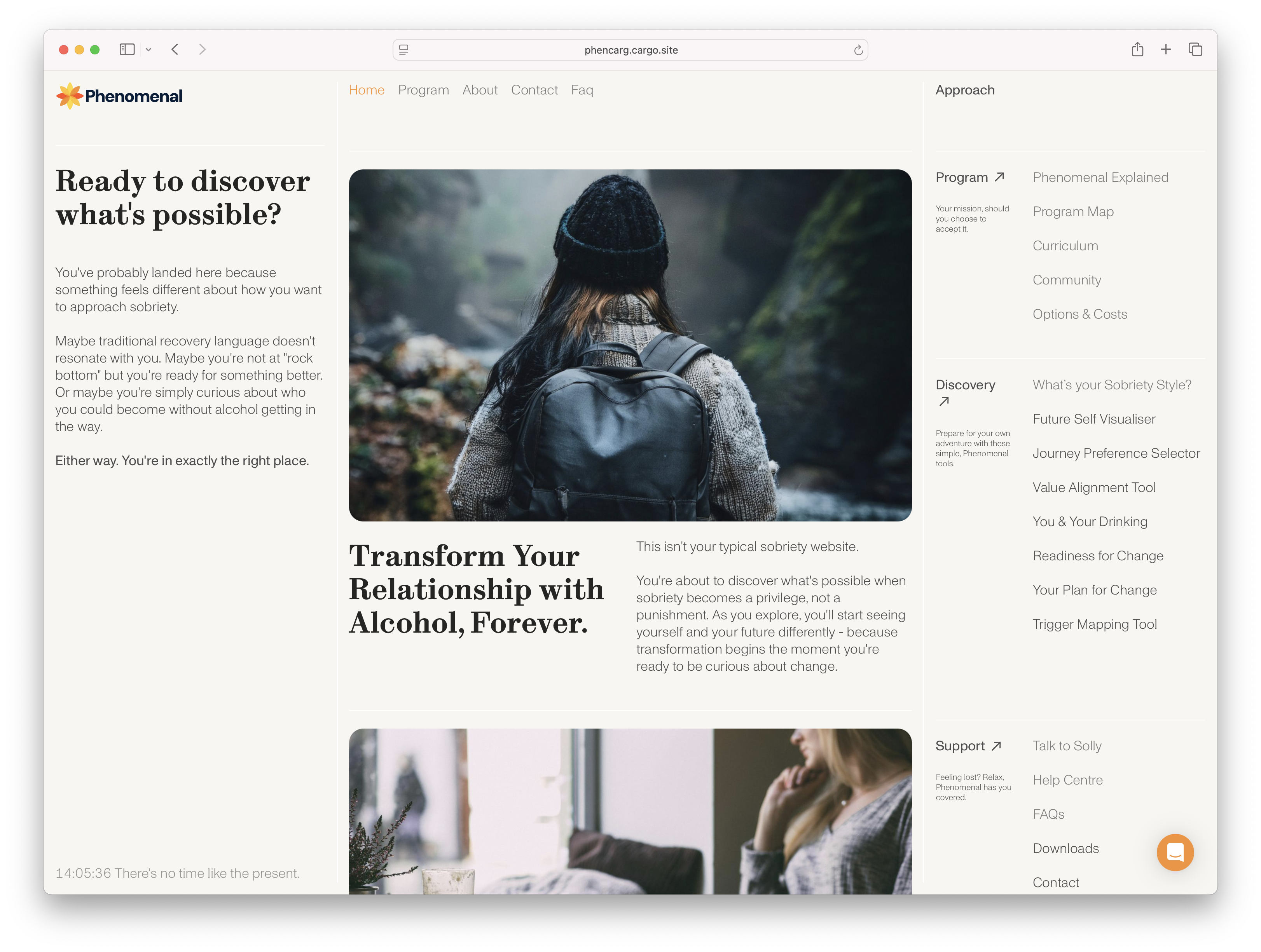
So, instead of asking "Do you have a drinking problem?" the website will ask "Ready to discover what's possible?"
Instead of diagnostic assessments, there are exploration tools like:
- "What's Your Sobriety Style?" quiz that helps people understand their preferences and motivations
- Future Self Visualiser where they can build a picture of their transformed life
- Journey Preference Selector that honours different approaches to change
Every element uses the same metaphorical framework as the Phenomenal program itself. The language of journey, growth, and becoming is consistent from first click to final celebration.
The Revolutionary Result
People don't leave the website thinking "I now have information about a program." They leave thinking "Something just shifted in how I see myself and what's possible."
That shift - that moment of seeing yourself differently - is where all lasting change begins. And it happens before they've spent a penny or committed to anything beyond curiosity.
Beyond Recovery: A New Model for Transformation
This approach isn't just about sobriety websites. It's about any experience designed to help people change I guess. Whether you're helping people with fitness, relationships, career transitions, or personal growth, the principle remains the same:
What if your marketing became the beginning of their transformation?
Instead of convincing people they need what you're selling, what if you created experiences that immediately demonstrate the value of your approach? Instead of talking about change, what if you facilitated actual change in real-time?
The Bigger Picture
We're living through a fundamental shift in how people approach personal development. The old model of "expert prescribes solution to broken person" is giving way to "guide supports person in discovering their own path."
This new model requires completely different digital experiences. We need websites that honour people's intelligence, respect their autonomy, and trust their capacity for growth. We need platforms that engage curiosity rather than exploit crisis.
The Phenomenal website is my attempt to build something that matches this new paradigm - a digital space where transformation begins the moment someone shows up with genuine curiosity about change.
What This Means for the Future
I believe we're going to see more and more organisations moving away from traditional conversion-focused websites toward experience-focused platforms. The brands that thrive will be those that provide genuine value before asking for anything in return.
In the recovery space specifically, this could be revolutionary. Imagine if people's first interaction with sobriety resources left them feeling inspired rather than intimidated. Imagine if the act of exploring your options actually moved you closer to your goals rather than simply informed you about them.
That's the world I'm building toward, one discovery journey at a time.
The Personal Stakes
For me, this isn't just about better website “design” - far from it in many respects - it's about creating the experience I desperately needed when I was questioning my own relationship with alcohol. I needed something that honoured my intelligence, respected my autonomy, and trusted my capacity for growth.
Traditional recovery websites made me feel like I was either "fine" or "broken" with nothing in between. I needed something that said: "You're already whole, and you're ready to discover what's possible when nothing gets in the way of who you really are."
That's what I'm building. Not just for people like who I was, but for the thousands of others who need a different kind of invitation to change.
Your Turn
Whether you're building websites, creating programs, or simply thinking about how to support others in their growth, the question is the same:
Are you asking people to fit your solution, or are you creating experiences that help them discover their own path?
The future belongs to those who choose the latter.
What digital experiences have actually changed how you see yourself or what's possible? I'd love to hear about moments when a website, app, or online interaction shifted something for you.
David Henzell is building Phenomenal, a sobriety program that treats transformation as a privilege rather than punishment. The new website launches (hopefully) soon at phenomenalsobriety.com