There is a particular kind of exhaustion that comes from performing "okayness" for long enough that you forget it's a performance.
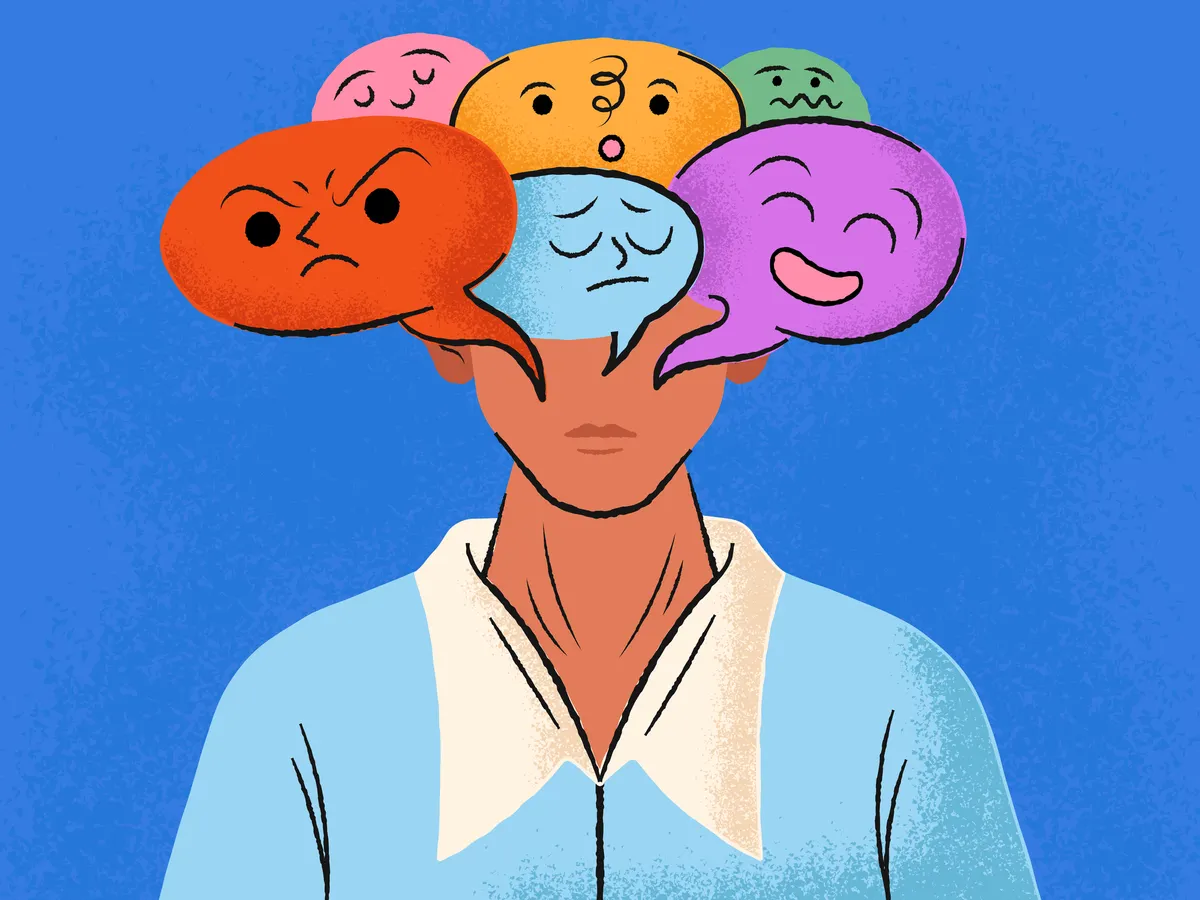
You get so good at reading a room. At sensing what version of yourself will land best in this moment, with this person, in this particular light. You become fluent in other people's expectations - not through arrogance, but through necessity. When your own internal compass has felt unreliable, you learn to navigate by other people's faces.
Alcohol helped with all that. Or so it seemed. It smoothed the edges of the performance. It gave you something to hold, something to do with your hands, a reason to stay in the room rather than retreat into your own silence. It made the gap between who you were and who you needed to be feel, briefly, more manageable.
What I didn't understand for a long time was that I was outsourcing my self-trust. Drink by drink.
I think a lot of people who develop a difficult relationship with alcohol have one thing in common - not a character flaw, not a weakness, not some absence of willpower - but a learned habit of looking outward before looking in.
It usually starts early. You learn to scan before you speak. To study the atmosphere before you take up space. To ask, consciously or not: what version of me is acceptable here? And when you don't know the answer, when you can't figure out how to exist correctly in this moment, sometimes you go quiet. You freeze. You disappear a little.
That's what masking looks like from the inside. Not a lie exactly. More like a constant low-level absence of yourself, a leaving behind that's so gradual you don't notice it happening.
Alcohol gave that absence a shape. A social lubricant, we call it - as though the problem was always friction, and the drink was simply helping things flow. But what it was really doing, for me at least, was keeping me from having to learn any other way. It meant I never had to figure out how to be in a room as myself, uncertain and slightly awkward and exactly as I was. I could just reach for something that made the uncertainty quieter.
The trouble is, the uncertainty doesn't go anywhere. It waits.
There's a moment in early sobriety - it can come at week two or month six, there's no reliable schedule - where you realise you've been standing at the edge of yourself for years, waiting for permission to come in.
Permission to be uncertain. Permission to not know what to say. Permission to be in the room without first making yourself useful or entertaining or palatable. Permission to be unwell without disappearing.
When alcohol is no longer managing that gap for you, the gap becomes visible. And it is both terrifying and, eventually, clarifying.
Because what you start to see is that the waiting was never necessary. You were always allowed in. You just hadn't believed that yet.
Self-trust, I've come to think, is not the same thing as certainty. That's a crucial distinction that took me a long time to land on.
Certainty is "I know what to do." Self-trust is something slower and stranger - it's more like I will stay in relationship with myself even when I don't know what to do. It's the commitment to keep checking in, keep listening, keep treating your own experience as something worth paying attention to rather than immediately handing over.
Drinking interfered with that relationship in a particular way. Not just because it numbed things - though it did - but because it made the numbing feel like safety. It taught me to interpret the quieting of discomfort as the correct outcome, when really I was just learning to override myself more efficiently.
And when you've been doing that for long enough, you lose the thread. You stop being able to distinguish what you actually think from what you've told yourself to think. What you actually feel from what feels acceptable to feel.
Sobriety, at its best, is the slow work of finding that thread again.
I want to be honest about what that work involves, because it doesn't look like what I thought it would.
I expected clarity. I expected some version of arriving. Instead, what I got was a much more intimate acquaintance with my own discomfort - with the particular texture of my anxiety, my grief, my uncertainty - without anything to soften the edges. I had to learn to sit with myself in ways I'd been avoiding, sometimes for decades.
There is a kind of grief in that. For the years spent at a slight remove from your own life. For the conversations you half-engaged with, the experiences you took the edge off of before they could fully reach you. For the version of yourself that you kept at arm's length because you didn't quite trust them to be enough.
And alongside the grief, something else. A slow, unfamiliar steadiness.
Not the steadiness of certainty - I want to be clear about that, because that kind of certainty is largely fiction. But the steadiness of I have been here before and I came through it. The steadiness of I can feel this and it won't destroy me. The steadiness, eventually, of noticing that your own response to difficulty is actually worth something.
There's a question I come back to a lot with people I work with: When did you stop trusting yourself?
Because usually there is a when. Sometimes it's dramatic - a crisis, a period where your own judgement genuinely failed you, a time when your mind wasn't a safe place to orient from. Sometimes it's quieter - a childhood pattern, a relationship, a slow accumulation of moments where looking inward felt dangerous and looking outward felt safer.
The drinking often comes later. A way of managing an already existing gap between yourself and your own experience. Which matters, because it means that simply stopping drinking doesn't automatically close that gap. You have to go back and learn something you may never have been fully taught - how to inhabit yourself. How to let your uncertainty exist without immediately handing it to someone else. How to let your yes and your no matter.
That work is harder than quitting. And it's also the part that makes the quitting stick.
I am not offering certainty here. I'm not standing on the other side of something telling you it gets easier in a clean, linear way, because that's not been my experience and I doubt it's been yours.
What I can say is this: the pause you've been living in - the waiting for confirmation, the waiting for permission, the standing at the edge of your own life waiting to be allowed in - that pause is not your personality. It's a learned response to feeling unsafe. And responses that were learned can, over time, be unlearned.
Self-trust grows the way most things grow. Slowly. Quietly. Through practice and through failure and through choosing, again and again, to come back to yourself - even when that's uncomfortable. Especially when it is.
You were always allowed in.
That's the permission you were waiting for.
You just had to be the one to give it.